
IT IS NOT DOWN IN ANY MAP; TRUE PLACES NEVER ARE 2020
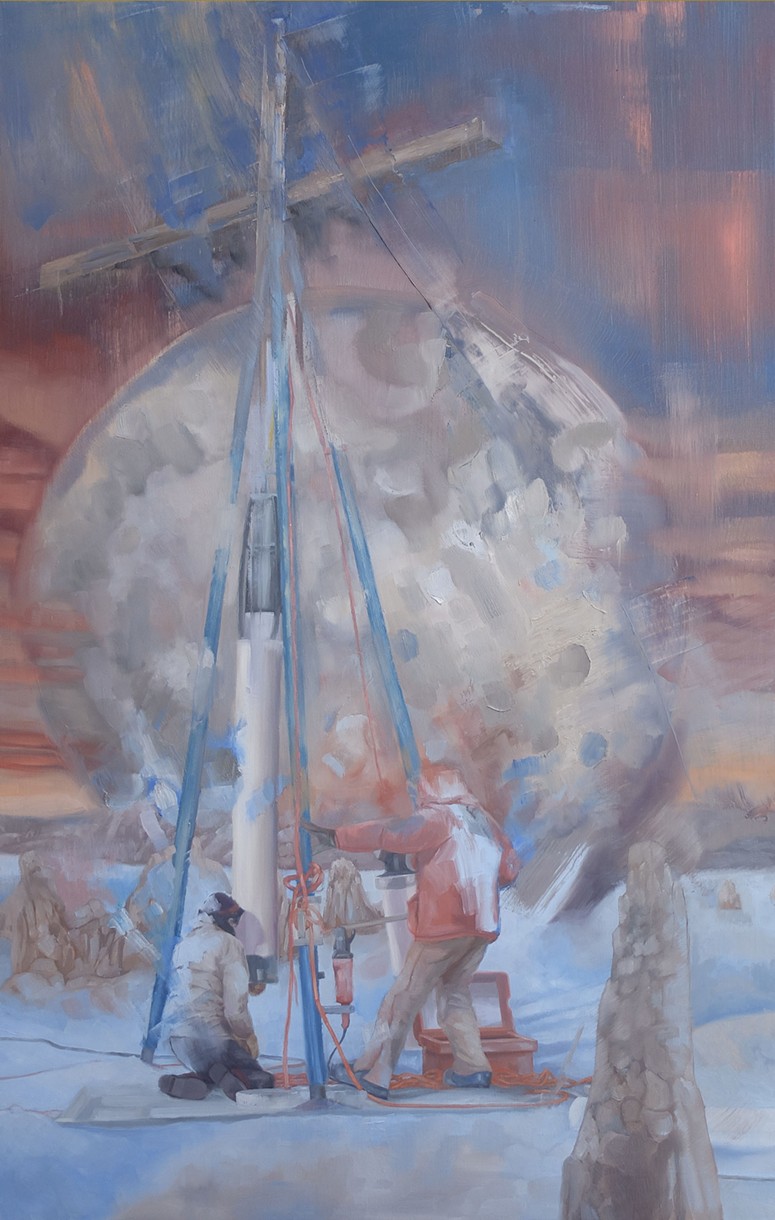
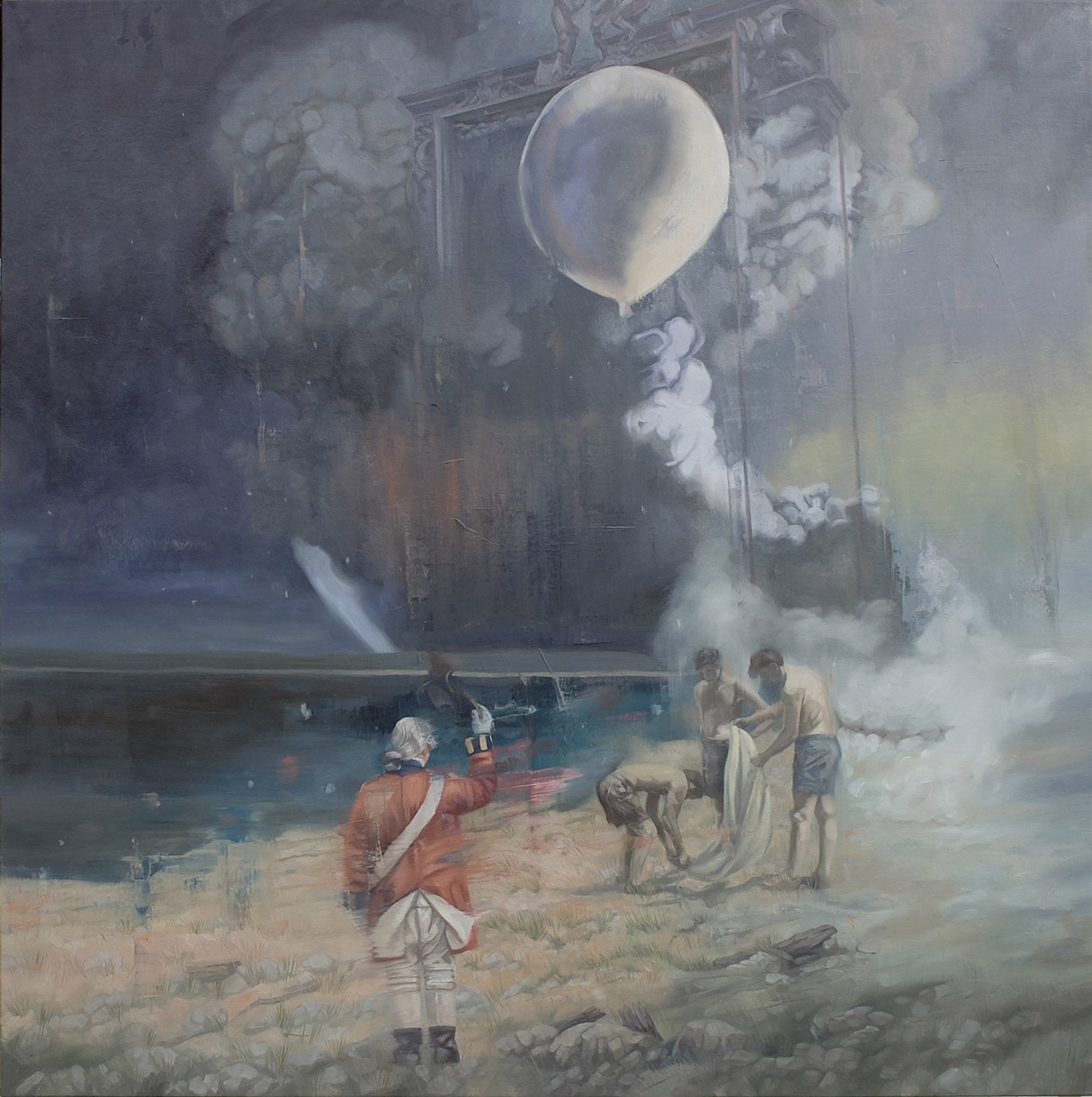
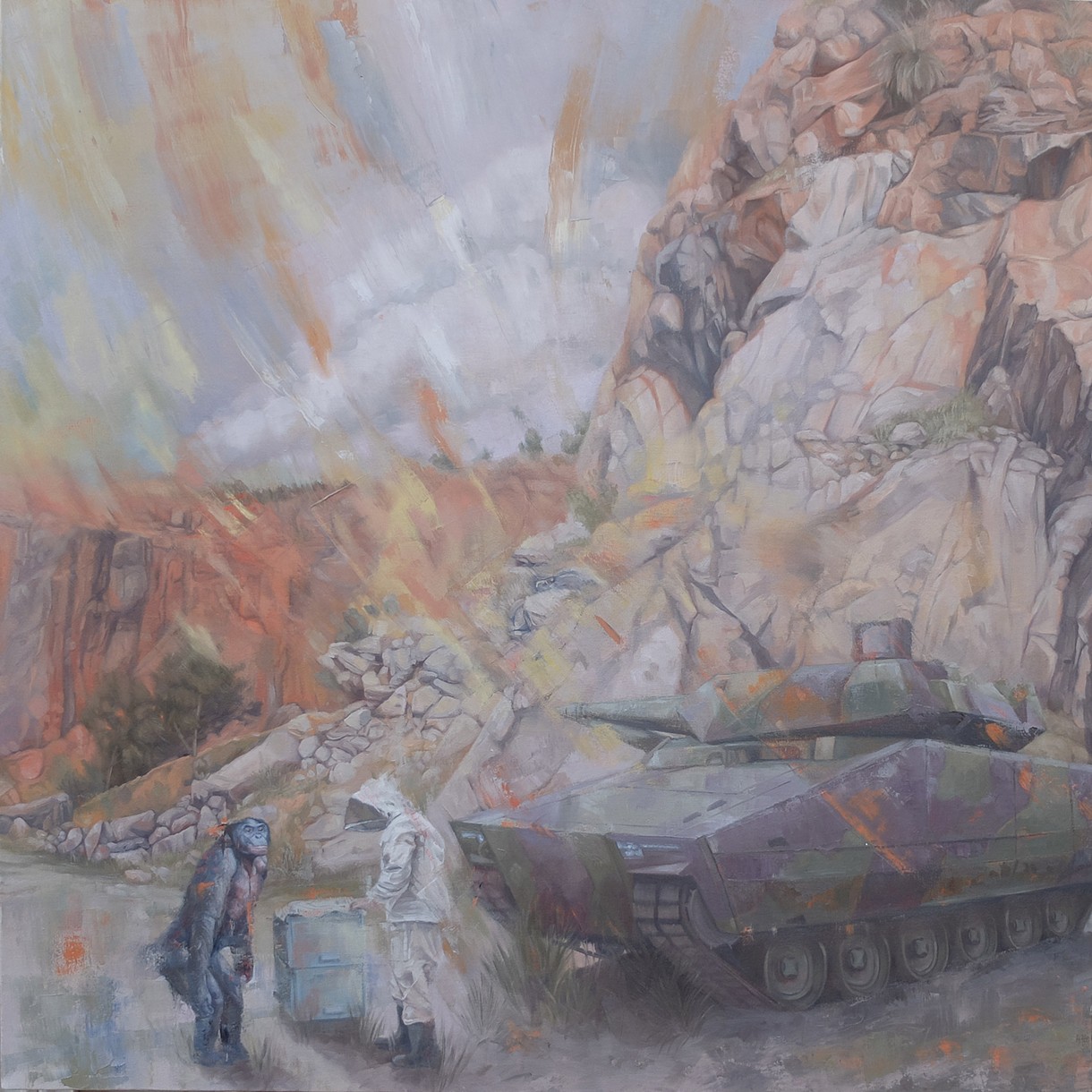
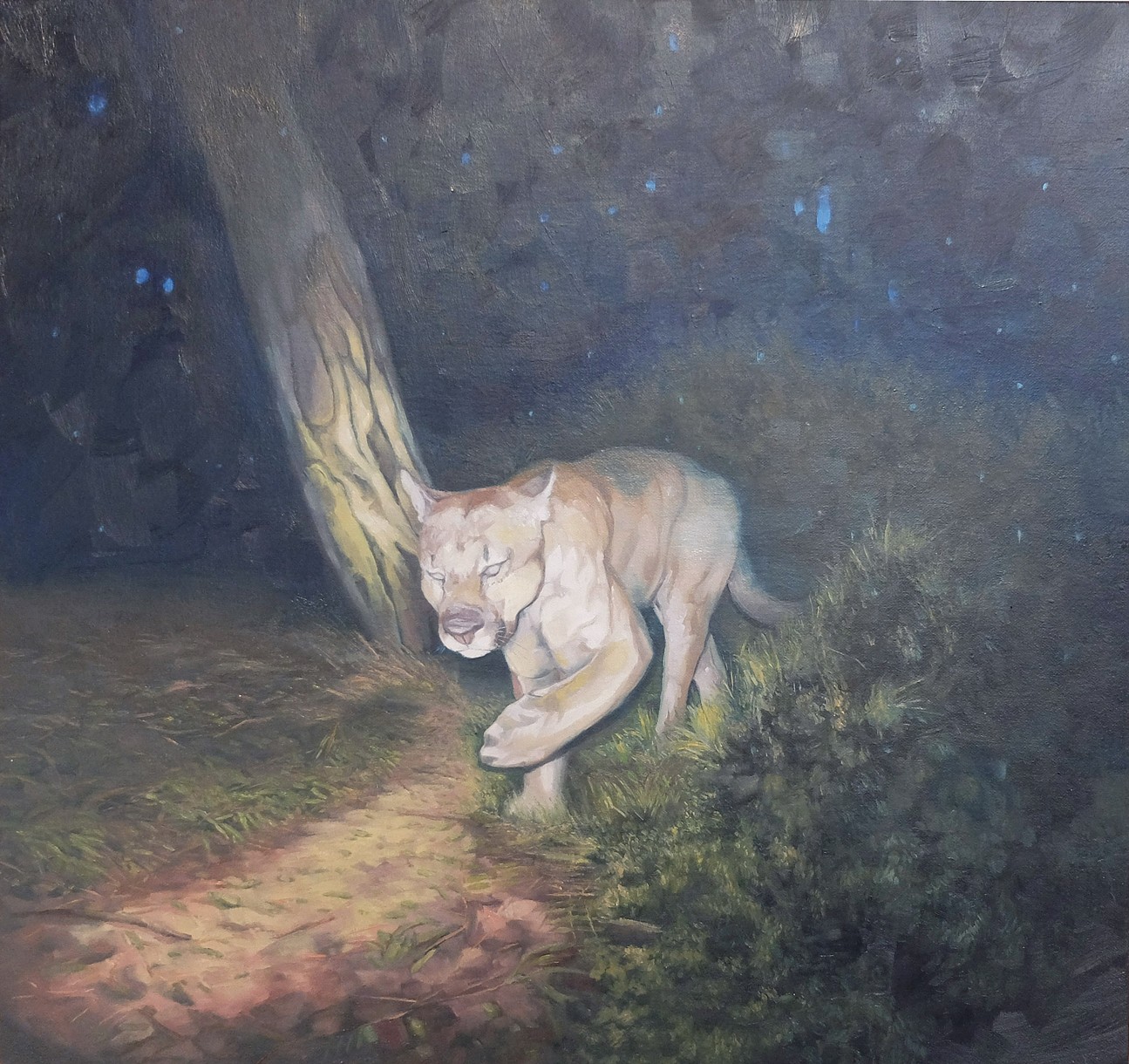
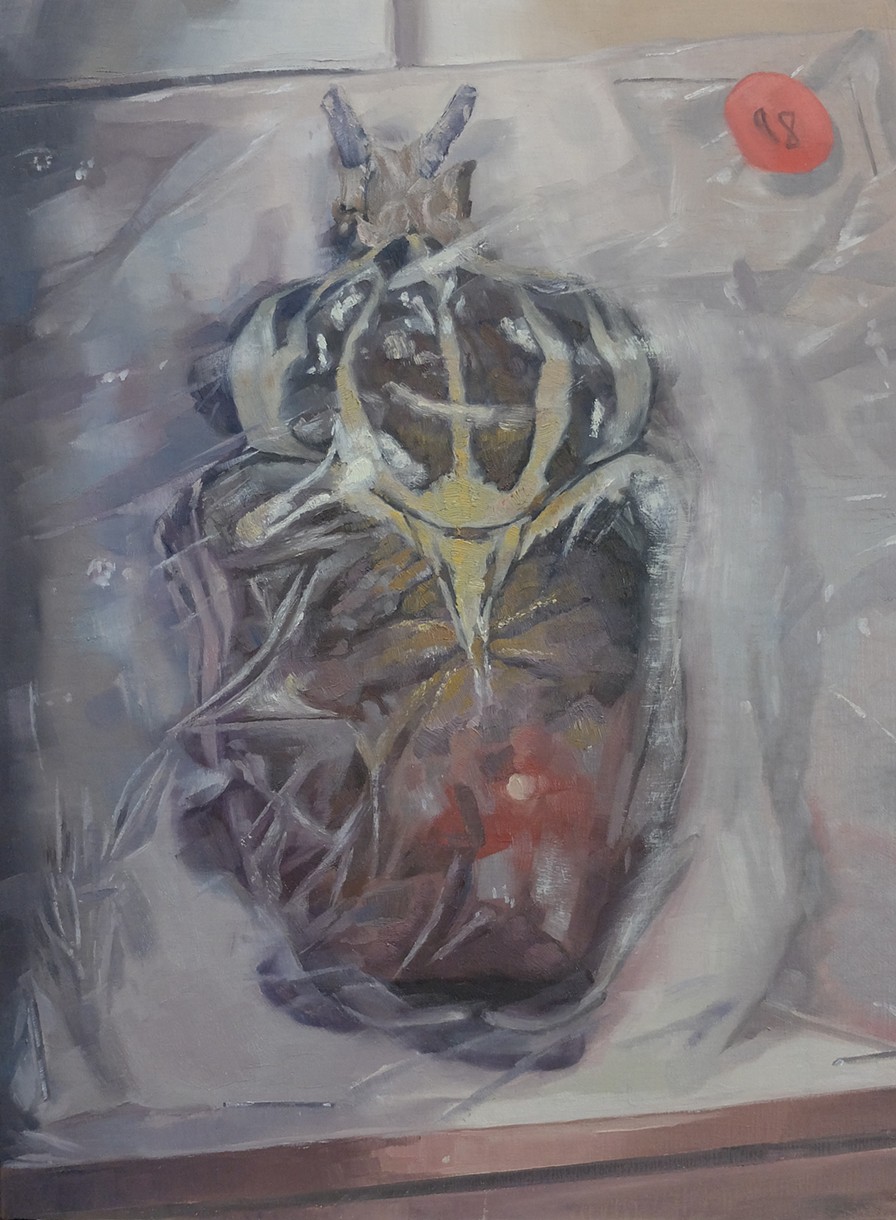
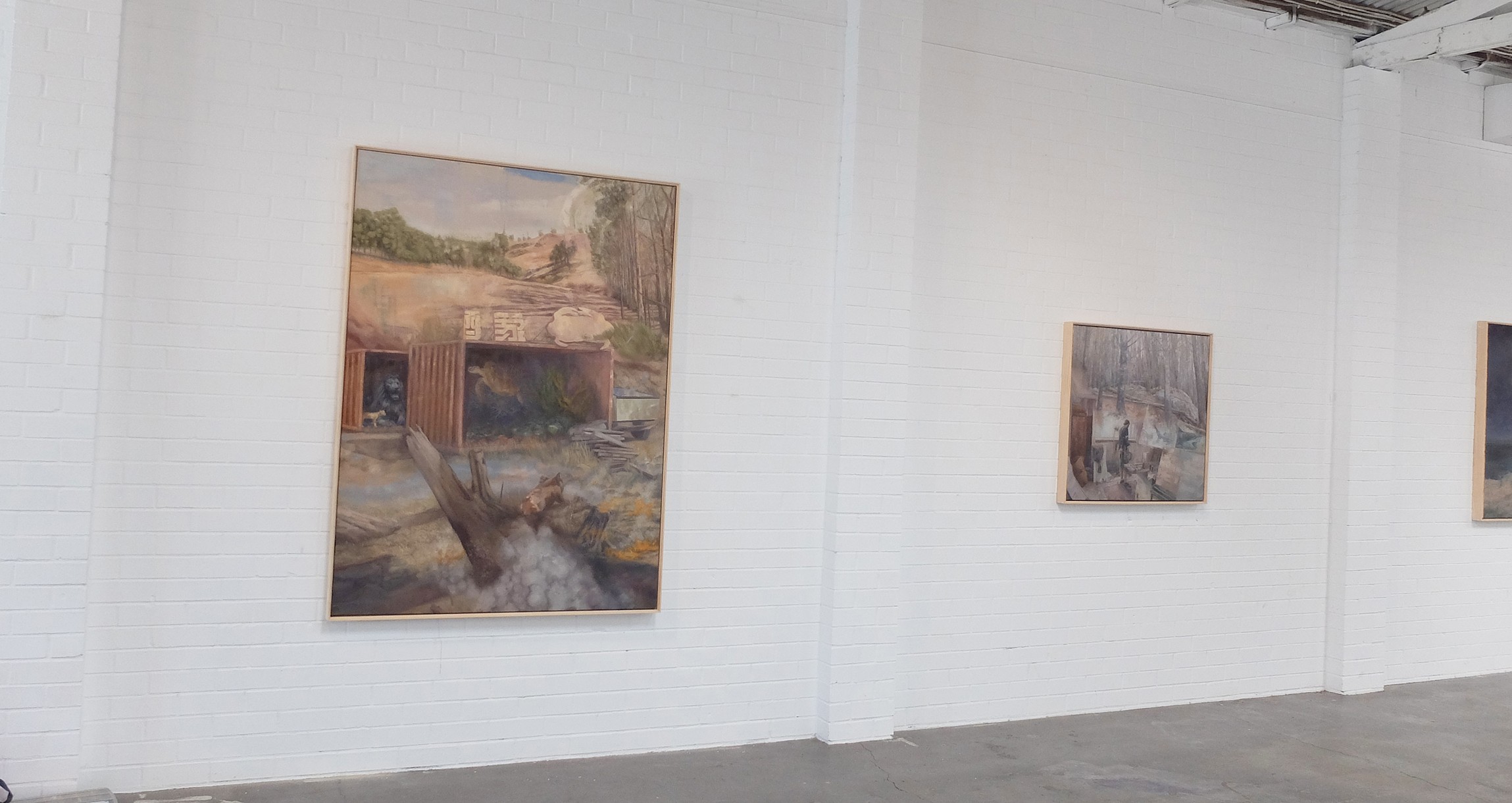
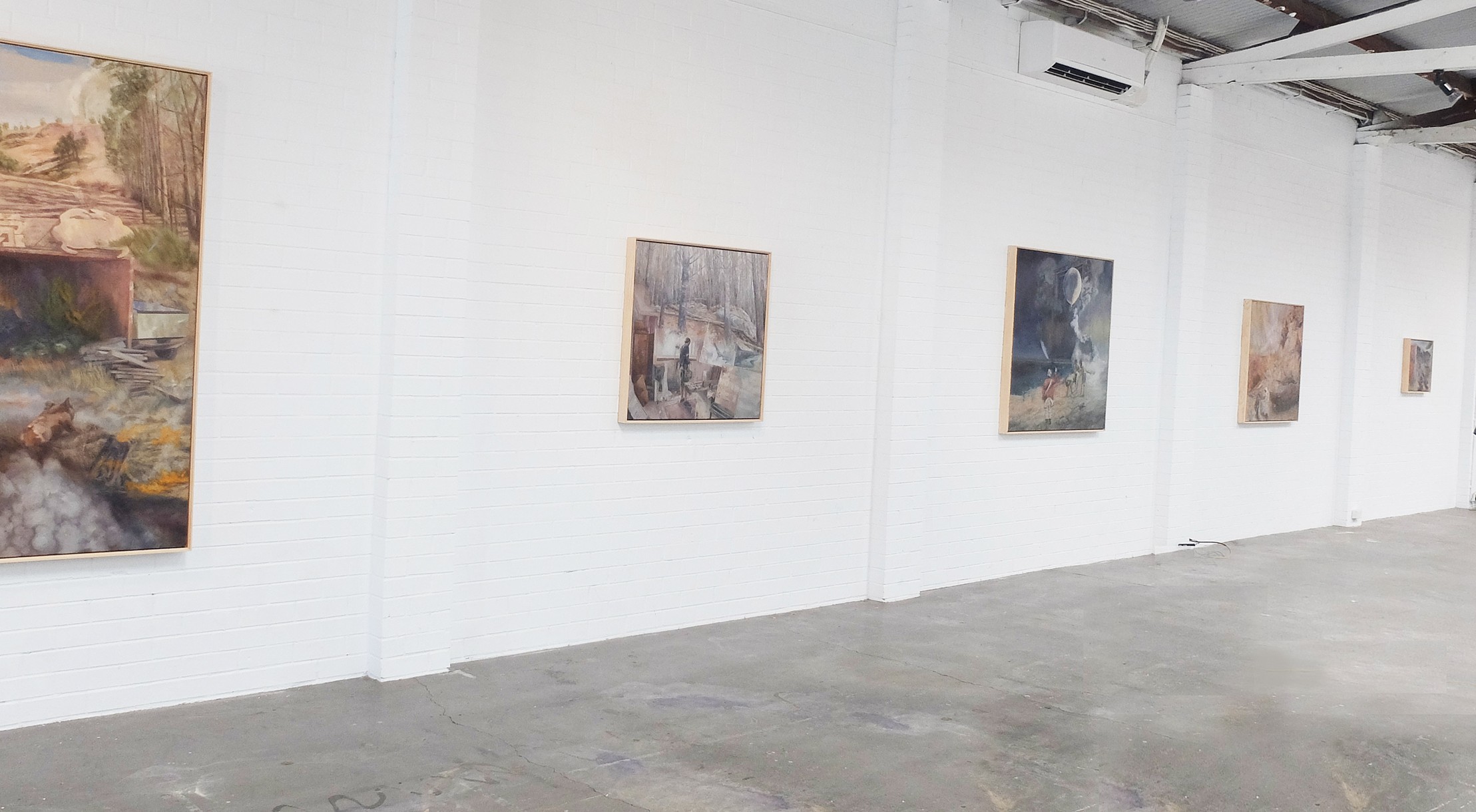
It is Not Down in Any Map; True Places Never Are is a series of paintings and drawings by Jarrad Martyn which explore humanity’s relationship with the natural environment. The title originates from a passage in Herman Melville’s 1851 novel ‘Moby Dick’, in which the protagonist, Ishmael, describes from where his close friend Queequeg the Harpooner, originates. The quote associates the ‘truth’ of a physical place with the past experiences had in that place. This sense of finding value through memory is used as an analogy for the content within the body of work which is largely informed by spending time exploring nature, travelling, and the development of new pursuits.
The process of bricolage, (something constructed from a diverse range of things) is used to collate academic research and the associated imagery to create an alternate conversation. This newconversation is both internal and external, and is presented through ambiguous spaces where motifs serve a symbolic function. Heavily relying on shifts between expected context and associated time periods, the contrasting motifs are used to explore the relationship between industry and the environment, species hierarchy, as well as the conservation function of zoos. Conversely, some works also tell a universal story that aims to unite humanity, while also suggesting what (if anything) the act of painting can offer to environmental conversation.
The handling of paint is characterised by making adjustments to the opacity, texture, and clarity of the paint. The aim of which is to hinder the representation of motifs - to encourage the audience to look longer, and to deduce linksbetween, and decipher their own conclusions as to what events are unfolding, and the symbolic meanings within.
This body of work was largely made during a residency at Art on the Move, and is supported by the Department of Local Government, Sport and Cultural Industries (DLGSCI)
Watch The Best of Opening Night on YouTube: Richard Healy & Jarrad Martyn solo exhibitions Feb 2020
Exhibited at Stala Contemporary, West Leederville, WA
www.stalacontemporary.com.au
ARTIST STATEMENT
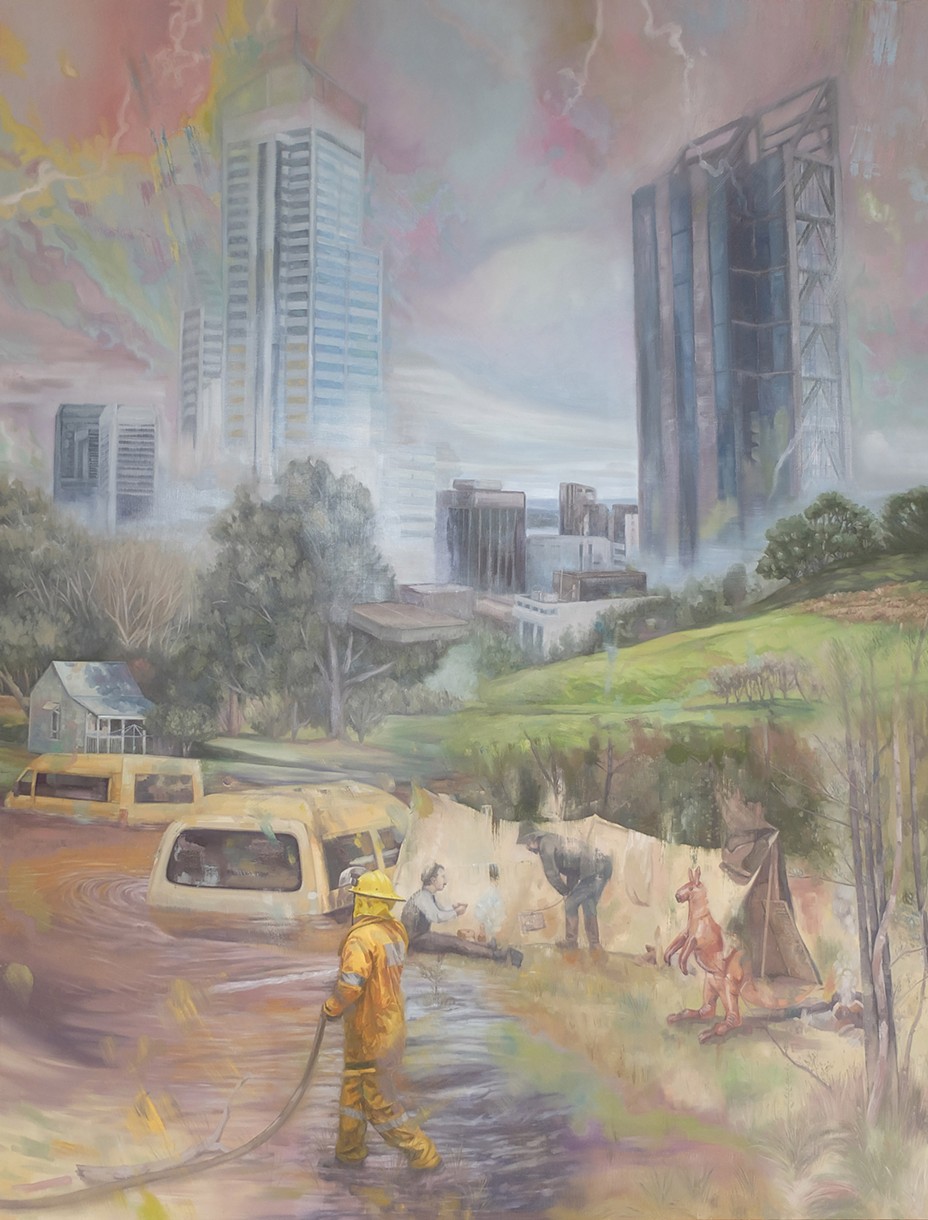
The painting Haze explores the relationship between urban and rural communities as the natural environment changes. The changing global climate is marked by an increase in extreme weather events. Haze collages a fire-fighter attempting to hose down several flood damaged cars, as some distant figures interact over a boiled billy. In recent years, society has become much more aware of how their daily choices affect the overall ecosystem. The predicament facing the fire-fighter is symbolic of the current indecision and anxiety that many feel towards making these choices, or by climate inaction. Most significantly, the anxiety towards our inability to meet the agreed outcomes outlined by the Paris Agreement (2015).
The figures within the painting are artists themselves, taken from the painting The Artist Camp (1886) by Tom Roberts. By placing the camping artists within the scene, it sets up a line of questioning about what painting can offer to this changing situation. It also acknowledges how adaptable past generations of humans were, and how humans have become more reliant on material possessions and technology as time has passed. This sense of insistent consumerism is reflected by the plastic blow-up Kangaroo; nature becoming artificial in our desire for increased capital and economic growth.
Characteristics of the Heidelberg School of Painting, such as the isolated cottage, rolling hills, and dense foliage, have become symbolic representations of what Australians consider a rural landscape. Using source images taken from a rural property in Nannup,WA, these characteristics are juxtaposed against the looming skyscrapers of the Perth Central Business District.These buildings suggest a level of control over the future of our relationship with the environment. Many decisions of this relationship will be experienced initially through the weather, shown in Haze by parts of the sky and the wider composition is broken up by shapes and hues derived from weather forecast graphics.
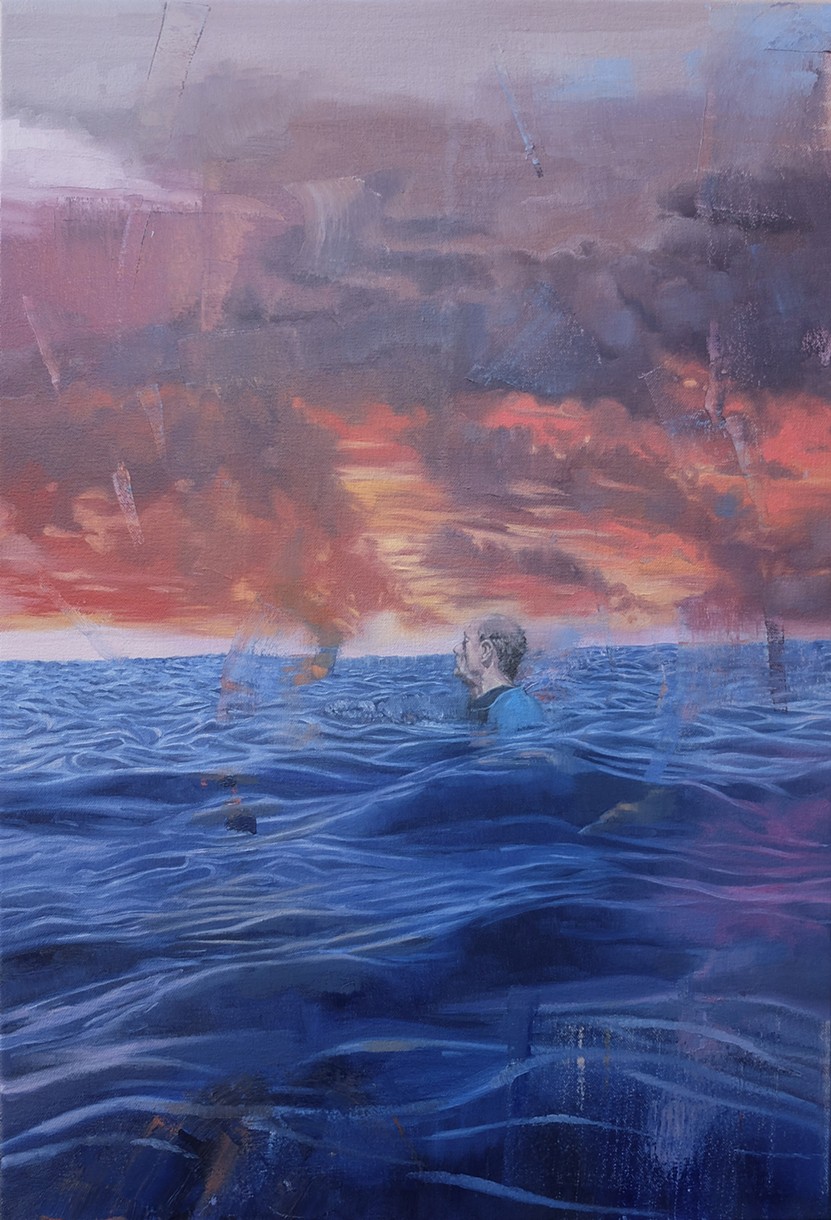
The Sky is Falling depicts someone gazing off into the distance while treading water in the ocean. The smallness of the figure amongst the vastness of the sky and ocean encourages a sense of contemplation. However, as we are unable to see any land in the scene we are also anxious about how far out the swimmer is, and what his overall purpose is. The space around the figure is distorted, with parts of the sky falling into the rough ocean waves, rising up to meet the sky.
This sense of ambiguity and anxiety about the swimmers purpose, combined with the fractured landscape acts as an analogy for the existential dread felt during the Covid19 period. A period which is marked by a new appreciation of borders amongst the continual anxiety felt by the changing climate. The idea of keeping afloat by any means in rough seas or risk drowning, characterises the nature of this anxiety.
More specifically, the subject matter is my Father, with the reference image taken by me at Mettams Pool in North Beach, where we have previously been snorkelling together. I believe that a lot of parent-child relationships are characterised by the child asking for advice and the parent providing guidance. As the experience of living through a worldwide pandemic is unprecedented in recent memory, I believe it would have been difficult for many in my Father’s position to provide guidance, and blindly lead without anxiety.
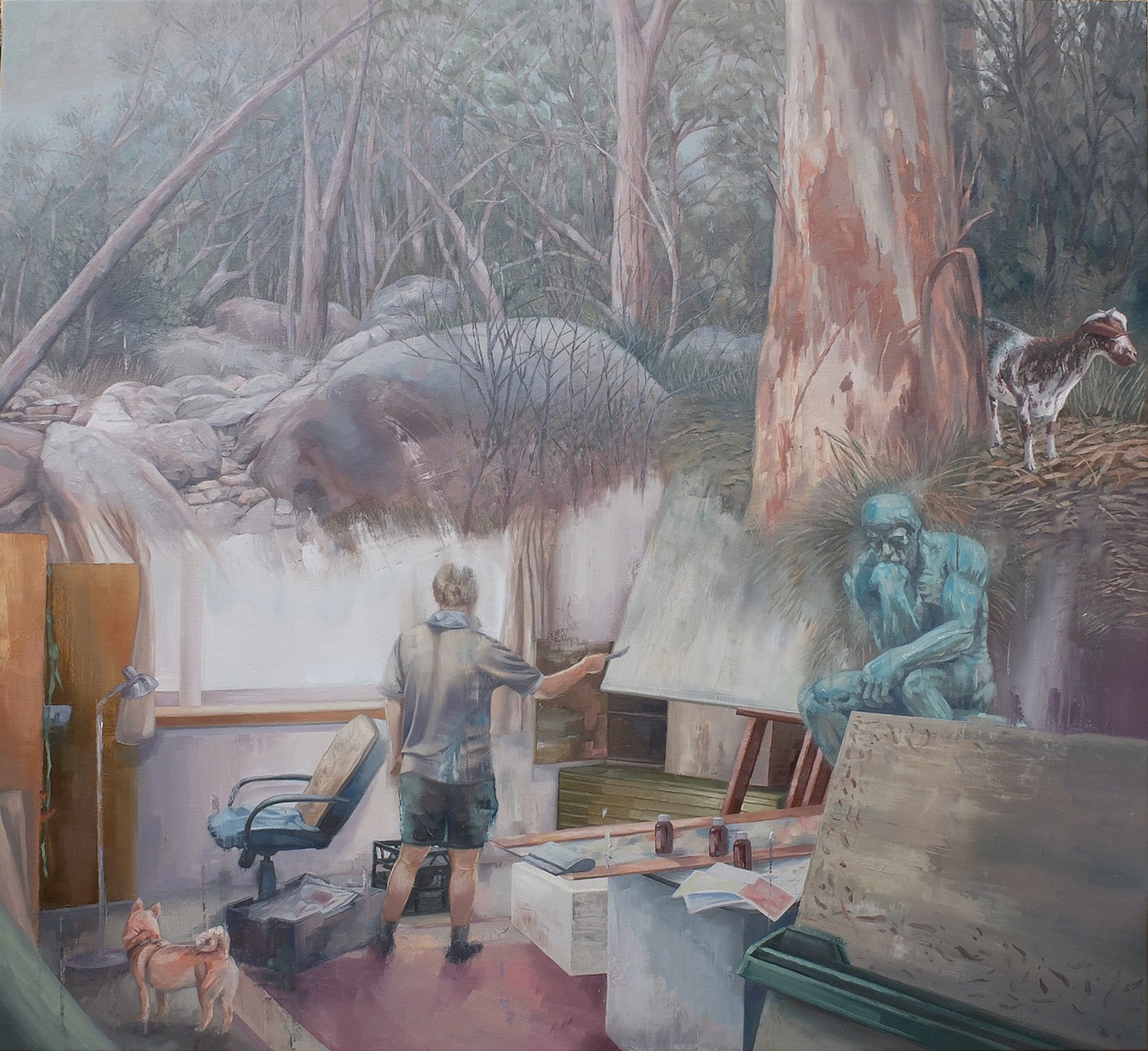
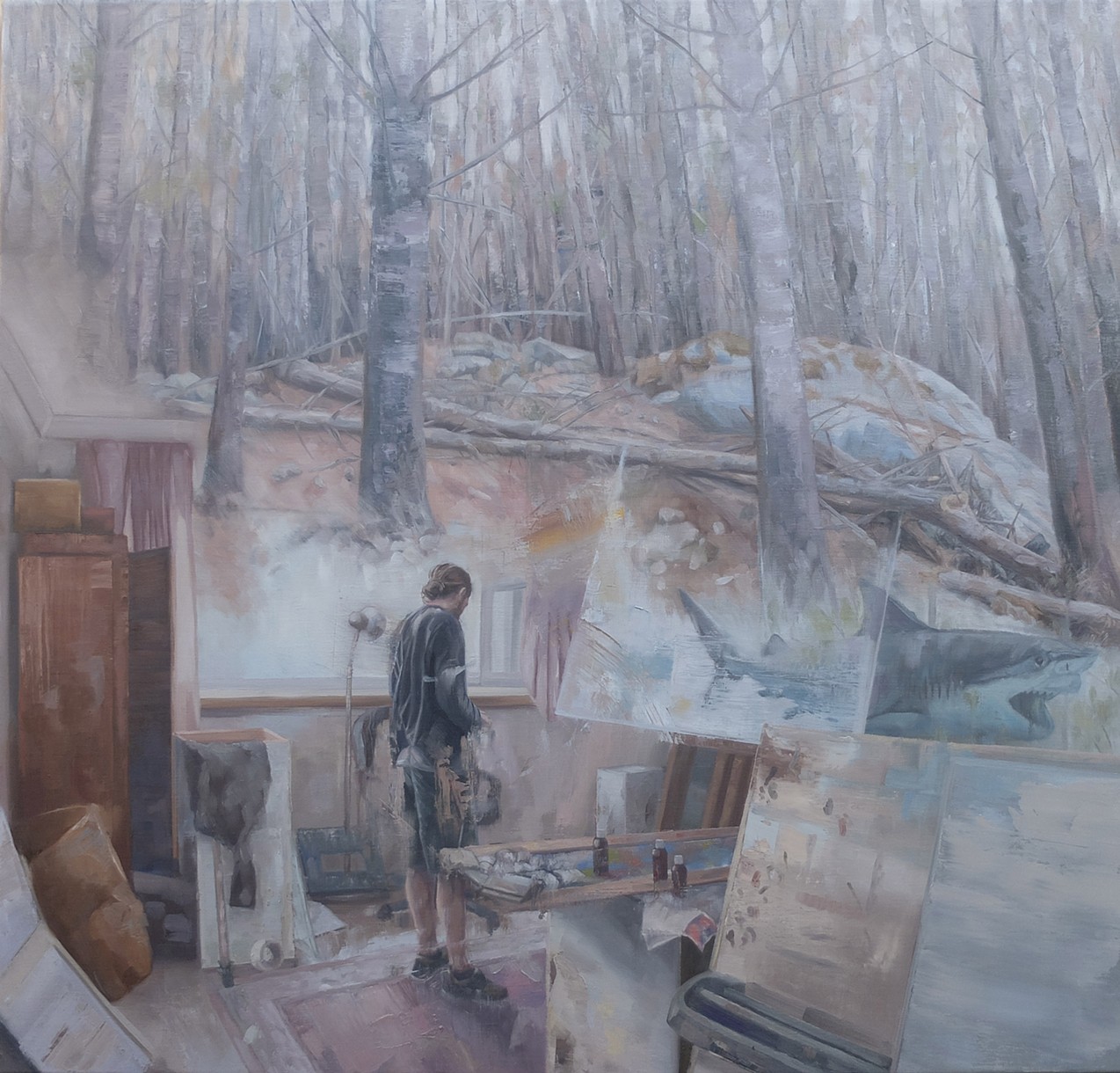
Cabin explores the relationship between painting and what it offers to the wider artistic discourse.
One of the recent focuses of my practice has been exploring how we are engaging with the natural environment. Cabin is a self-portrait depicting the artist in the studio, which is consuming and also being consumed by the wilderness. Cabin encourages the questioning of the conceptual function of painting, and what artistic practice can offer to the conversation of environmental conversation.
By representing the artist in the studio Cabin refers to not only work, but coupled with the blank canvasses presents endless opportunity, and conversely the unfortunate bouts of creative blocks that come with working in the creative industries.
The painting features snippets of photographs taken in Tasmania, mainly the Freycinet National Park and Wineglass Bay, and the suburban streets of Launceston. Tasmania represents an ancient, pristine wilderness to most city-dwelling Australians, and in Cabin serves to remind us of the shrinking hectares of natural landscape the world over, and humans’ direct environmental impact on this. Conversely, these photographs are also a tribute to my love of travel, and symbolises escapism and new adventures.
Cabin also features a goat, and a dog, both used to indicate species hierarchy, and the domestication of wild animals. Species hierarchy is an ongoing focus of my work, and this iteration aims to call into question the animals humans deem worthy of domestication, and for what reasons.
The work features Auguste Rodin’s sculpture The Thinker (1904) staring into the situation unfolding, and pondering how our understanding of being human affects our ability to prosper and continue as a species.
Cabin is the continuation of the series of self-portraits in the studio, alongside Paranoia (2019). An excerpt from Professor Ted Snell’s essay on the work examines the themes explored: “The history of painting in Australia has served many nationalistic purposes, none more so that the Impressionism of Tom Roberts and Arthur Streeton and the mythologising of Sidney Nolan, but Martyn questions whether these artists have impacted on our behaviour? As Australia burns and vast tracks of land are turned to ash, devastating lives and destroying ecosystems, what role can art play?”
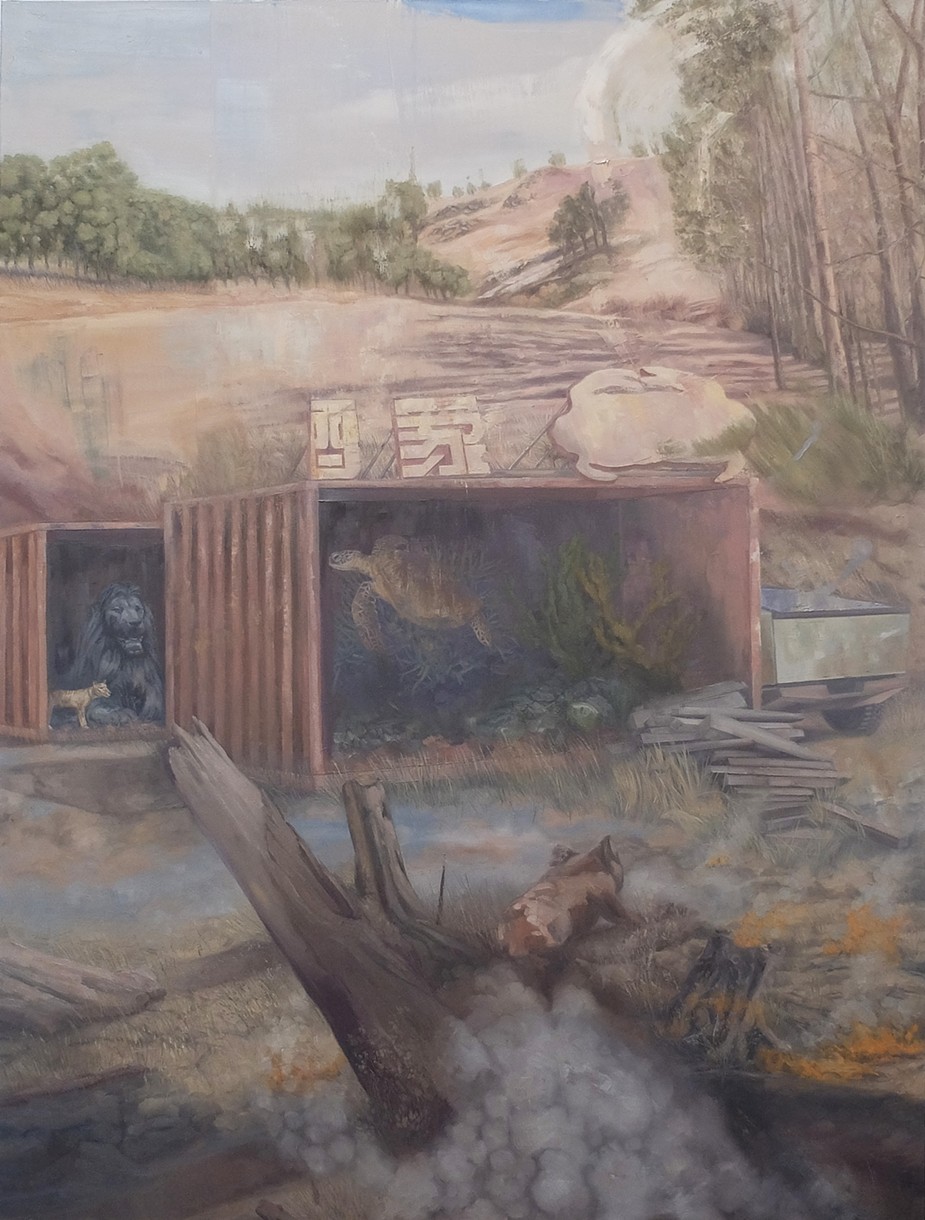
Force Your Hand explores the relationship between industry and the environment. The composition is largely made up of imagery from the former logging town Nannup (South Western Australian), the Cambodian port town, Sihanoukville, and Northern New South Wales towns recently affected by bushfires.
Two open freight containers sit in the middle of the composition, while the background features a large expansive landscape made up of rolling hills, dense trees and flat sky - Characteristics that are common with the Heidelberg School of Painting. These characteristics have historically been used to create a sense of myth and nationalism surrounding the representation of the landscape in painting. Force Your Hand represents and plays on these characteristics to question how we as humans are engaging with the landscape.
Isolated on a field of smoke, the meat-like animal form of a koala appears lost and unsure of its fate. The source image of the Koala is taken from media coverage of the recent fires across Australia. The vulnerable species is walking towards another species, the endangered Green Sea Turtle. As the climate warms the likelihood that the sex of the turtles eggs are female increases. The turtle is suspended in the freight, with the critically endangered Elk and Staghorn Horn Coral species situated behind it. By bringing these two species together, the composition hopes to engage discussion about the worthiness, and direction of our attention and activism.
The rear freight reveals a large lion sculpture, taken from Trafalgar Square, London, a symbol of British colonial rule, where landscapes were territories to be exploited. Alongside, a Thylacine appears at the base of the lion, a reminder of Australia's high extinction rate, as well as the finite nature of other natural resources.
This idea of treating the landscape as a territory to be taken from, is further reflected by the Chinese signage above the freight. The characters make up half the Chinese word for casino, and was sourced on a trip to Sihanoukville in Cambodia in September 2019. Having previously been to Sihanoukville in 2018, the increased construction, foreign investment and the effects of over-tourism have ‘destroyed’ the port town. The once pristine beaches have become polluted, waters are increasingly overfished, building waste from the 24 hour a day construction schedule litters the streets and traditional cultural practices are undermined by large foreign owned casinos. As one of Australia's major resource export partners, we are somewhat complicit in this engagement with the environment. Referencing this symbolic habitat, Force Your Hand reaffirms that economic prosperity should not be considered more valuable than the health of our ecosystems.
Force Your Hand explores the relationship between industry and the environment. The composition is largely made up of imagery from the former logging town Nannup (South Western Australian), the Cambodian port town, Sihanoukville, and Northern New South Wales towns recently affected by bushfires.
Two open freight containers sit in the middle of the composition, while the background features a large expansive landscape made up of rolling hills, dense trees and flat sky - Characteristics that are common with the Heidelberg School of Painting. These characteristics have historically been used to create a sense of myth and nationalism surrounding the representation of the landscape in painting. Force Your Hand represents and plays on these characteristics to question how we as humans are engaging with the landscape.
Isolated on a field of smoke, the meat-like animal form of a koala appears lost and unsure of its fate. The source image of the Koala is taken from media coverage of the recent fires across Australia. The vulnerable species is walking towards another species, the endangered Green Sea Turtle. As the climate warms the likelihood that the sex of the turtles eggs are female increases. The turtle is suspended in the freight, with the critically endangered Elk and Staghorn Horn Coral species situated behind it. By bringing these two species together, the composition hopes to engage discussion about the worthiness, and direction of our attention and activism.
The rear freight reveals a large lion sculpture, taken from Trafalgar Square, London, a symbol of British colonial rule, where landscapes were territories to be exploited. Alongside, a Thylacine appears at the base of the lion, a reminder of Australia's high extinction rate, as well as the finite nature of other natural resources.
This idea of treating the landscape as a territory to be taken from, is further reflected by the Chinese signage above the freight. The characters make up half the Chinese word for casino, and was sourced on a trip to Sihanoukville in Cambodia in September 2019. Having previously been to Sihanoukville in 2018, the increased construction, foreign investment and the effects of over-tourism have ‘destroyed’ the port town. The once pristine beaches have become polluted, waters are increasingly overfished, building waste from the 24 hour a day construction schedule litters the streets and traditional cultural practices are undermined by large foreign owned casinos. As one of Australia's major resource export partners, we are somewhat complicit in this engagement with the environment. Referencing this symbolic habitat, Force Your Hand reaffirms that economic prosperity should not be considered more valuable than the health of our ecosystems.
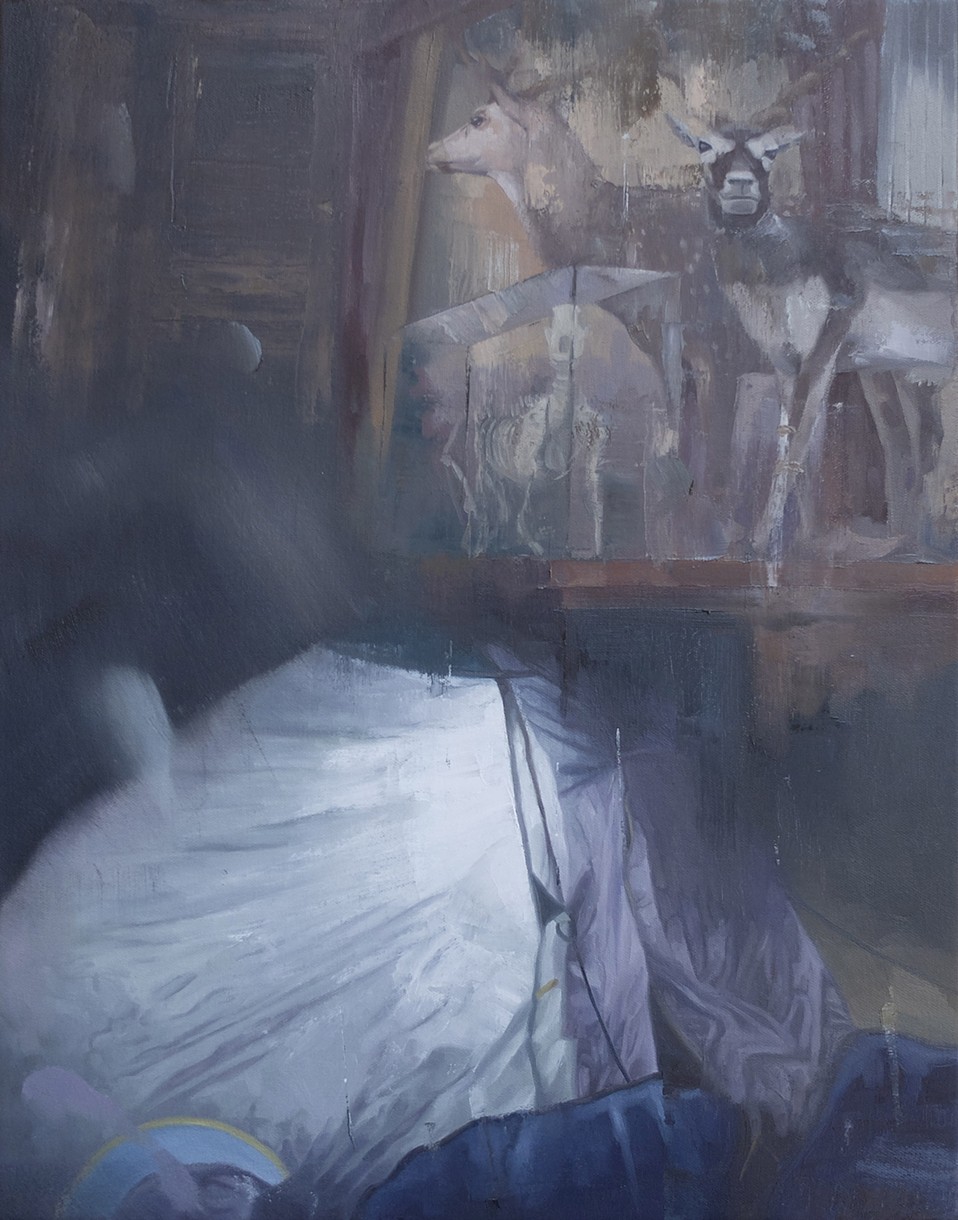
Watcher depicts an illuminated camping tent merging into a museum scene. The source photograph of the tent is from a personal camping trip to Coral Bay, in the North of Western Australia. The act of camping is often characterised by a more direct relationship with nature; The tent is designed to be set up in remote areas, where a closeness to and relationship with nature is encouraged. The act of camping also invokes a sense of hierarchy in the relationship to material things, where their importance become itemised by their weight, size, and utility.
The tent is juxtaposed with a scene from the Academy of Taxidermy in Guildford. An encased skeleton sits beside a taxidermied Antelope and Reindeer. The standard museum experience is designed to be educational and overall valuable. However, the experience is also characterised by an alienation to and how nature should be understood; A hierarchical relationship of control between humans and animals exists in this context. As the title Watcher suggests, humanity should place a stronger emphasis on coexisting and observing, rather than impacting. In recent years there has been a shift towards increased conservation and a reduction in the exploitation of animals for human gain. Watcher references this hope of coexistence, and the human race returning to nature.
Jarrad Martyn © 2026